Saint-Just
Jean-Pierre Léaud
Le chef du FLSO
Jean-Pierre Kalfon
La copine du chef du FLSO
Valérie Lagrange
La femme dans l'accident de voiture/un membre du FLSO
Juliet Berto
L'auto-stoppeur
Jean Eustache
un membre du FLSO
Anne Wiazemsky
l'homme de la ferme
Michel Cournot
Femme dans la Voiture
Helen Scott
Joseph Balsamo
Daniel Pommereulle
Original Music Composer
Antoine Duhamel
Director of Photography
Raoul Coutard
Screenplay
Jean-Luc Godard
CRCulver
As the 1960s went on Jean-Luc Godard kept up the kind of brash, zany, experimental style with which he made his name and became a cornerstone of the French New Wave, but his work increasingly showed a political consciousness sparked by the explosion of the consumer society in that decade. The class of haves, in his view, were being increasingly selfish and dog-eat-dog, while the have-nots of the world could not be expected to stand by idly. Society was surely headed for a breakdown, and his 1967 film WEEKEND is an absurdist vision of it in one hour and forty-five minutes. This is emphatically *not* a good entry point to Godard -- if you don't know his work, see Breathless or Le Mepris first -- but it is a marvelous capstone to his first decade of cinema. (After this, Godard disappeared from the limelight for some years while making more overtly political films with Jean-Pierre Gorin as the Dziga Vertov collective.)
Married couple Roland (Jean Yanne) and Corinne (Mireille Darc) set off from Paris one weekend for Corinne's parents' home, as her father is dying and they want to make sure they get their cut of inheritance. Not only is their relationship with Corinne's parents focused solely on money, but both Roland and Corinne are secretly having affairs and each plans to later dispose of the other in order to run away with their lovers. As Roland and Corinne hit the road, civilization appears to have vanished all around them: people are violently fighting each other over petty arguments, the road out of Paris is an endless traffic jam of honking horns and yelling, and the roadside is littered with car wrecks and their bloody victims.
WEEKEND is a grand portrait of human veniality like Dante's INFERNO. Even when Corinne and Roland encounter a group of hippies, the idealistic dreamers who oppose the cruel order of capitalist society, they are shown great cruelty. Godard was awfully prescient: not only did he shoot this film a year before the events of May 1968 and he presaged a youth revolt, but he also expected that youth to perpetuate the same flaws of the system they overthrew.
Visually, WEEKEND is as much a delight as any of Godard's other colour films of this time, with a pop art feel. Godard and his cinematographer Raoul Coutard had a great eye for colour, mainly the red, white, and blue from the French flag, but all the hues on screen are bold and electric. A great treat for film aficionados are several long tracking shots that required great skill to shoot, such as the long traffic jam. There's a lot of poetry in the shots: I don't know why, but a long take where a pianist plays a Mozart suite to a crowd of farmers in a barnyard and Anne Wiazemsky (in a non-speaking role) walks up to listen, is as emotionally moving to me as anything from Tarkovsky.
By this point Godard's films assume that the viewer is an intellectual, someone who has read a good bit of the literary canon and is aware of the political disputes not only of our time but also those reaching back to the 18th century. Thus as Corinne and Roland are wandering around lost around their own eventual car wreck, they come across the historical personage Saint-Just from the French Revolution (one of two amusing roles played here by the legendary Jean-Pierre Léaud), who absurdistly declaims from his writings while decked out in period costume. They then meet Tom Thumb and Emily Brontë. As the climax of the film approaches, two representatives of the Third World, African and Arab dustmen that our protagonists hitch a ride from, recite a revolutionary Marxist text at some length. And one scene where Corinne recounts a sexual encounter to her lover is a parody of Ingmar Bergman's PERSONA, which had come out the previous year.
Criterion's re-release of WEEKEND on Blu-ray is a welcome event. The pop-art canvas of Godard's 1960s colour films comes through better in this higher-resolution format than on the old DVD releases. Criterion's extras are also enjoyable and informative. Viewers without a prior grounding in Godard's literary/political/social context will appreciate a 20-minute visual essay by Kent Jones which explains most of the references in the film, as well as some contemporary developments in Godard's life that aren't directly shown in the film, but made it what it is. There are interviews with the main actors from French television just before the film's 1968 release, and they explain how great it was to work with Godard, though one realizes that they hadn't seen the finished film and might well have been appalled at its anarchic pace and agitprop. The role of "making of" featurettes is provided by relatively recent interviews with cinematographer Raoul Coutard and assistant director Claude Miller.

Melancholia
Votes 2130 (7,2/10)
Date de sortie 26/05/2011
Détails »

Southland Tales
Votes 321 (5,1/10)
Date de sortie 15/05/2006
Détails »

Silent Hill
Votes 2713 (6,5/10)
Date de sortie 21/04/2006
Détails »

Songs from the Second Floor
Votes 146 (7,4/10)
Date de sortie 06/10/2000
Détails »
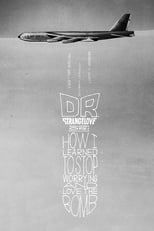
Dr. Strangelove or: How I Learned to Stop Worrying and Love the Bomb
Votes 3502 (8,2/10)
Date de sortie 29/01/1964
Détails »

He Was a Quiet Man
Votes 170 (6,5/10)
Date de sortie 23/11/2007
Détails »

House of Wax
Votes 1773 (5,8/10)
Date de sortie 30/04/2005
Détails »

Vanilla Sky
Votes 2496 (6,8/10)
Date de sortie 22/01/2001
Détails »

Mr. Nobody
Votes 4160 (7,9/10)
Date de sortie 06/11/2009
Détails »

I Lost My Body
Votes 668 (7,6/10)
Date de sortie 06/11/2019
Détails »

Antichrist
Votes 1586 (6,7/10)
Date de sortie 18/05/2009
Détails »

Donnie Darko
Votes 8356 (7,8/10)
Date de sortie 18/01/2001
Détails »

La La Land
Votes 12110 (7,9/10)
Date de sortie 29/11/2016
Détails »

Twin Peaks: Fire Walk with Me
Votes 1098 (7,3/10)
Date de sortie 03/06/1992
Détails »

mother!
Votes 4523 (7/10)
Date de sortie 13/09/2017
Détails »

Inherent Vice
Votes 1707 (6,6/10)
Date de sortie 25/12/2014
Détails »

The Girl Who Leapt Through Time
Votes 1209 (7,8/10)
Date de sortie 15/07/2006
Détails »

The Big Lebowski
Votes 7270 (7,9/10)
Date de sortie 18/01/1998
Détails »

Trainspotting
Votes 6674 (8/10)
Date de sortie 23/02/1996
Détails »

Beetlejuice
Votes 4013 (7,3/10)
Date de sortie 29/02/1988
Détails »