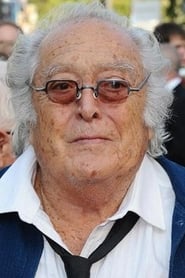
Grégoire Duval
Bernard Blier
Veterinarian
Maurice Biraud
Attorney General
Francis Blanche
Genviève Duval
Danièle Delorme
Sylvain Sautral
Jacques Riberolles
Maître Adreux
Yves Barsacq
Mme. Souchon
Catherine Le Couey
Mme. Sylvestre
Madeleine Geoffroy
Catherine
Françoise Giret
Preceptor
Charles Lavialle
M. Souchon
Raymond Meunier
Testut
Jean-Pierre Moutier
Police Superintendent
Albert Rémy
Laurent Duval (as René Renal)
René Tramoni
Original Music Composer
Jean Yatove
Camera Operator
Maurice Fellous
John Chard
Grégoire Duval - The Pharmacist - The 7th Juror.
Le septième juré (The 7th Juror) is directed by Georges Lautner and adapted to screenplay by Pierre Laroche and Jacques Robert from the Francis Didelot novel. It stars Bernard Blier, Maurice Biraud, Francis Blanche, Danièle Delorme and Jacques Riberolles. Music is by Jean Yatove and cinematography by Maurice Fellous.
Horrible Crime Near Pontarlier!
Overcome by the sight of a nude lady sunbather, Grégoire Duval (Blier) forces himself upon her and in a panic strangles her to death when she begins to scream. Returning back to his hum-drum existence, Duval is shocked to find the victim's boyfriend charged with her murder on circumstantial evidence. He's even more shocked when he is chosen for jury service on that very trial...
Crime of a coward - or a madman?
A caustic and potent piece of French cinema, Le septième juré operates on many narrative levels. In parts it's a cracker-jack legal drama, featuring a court case of dramatic verve, while the observations about the sometimes folly of the law is brutally laid bare. At other parts it's a cutting deconstruction of small town mentality, of class distinction and standings, all of which are not favourably portrayed in the slightest.
First you must save your soul.
Firmly operating in the realm of film noir, the makers produce a clinically atmospheric picture. Georges Lautner opens with an ominous shot of a lone fisherman in his boat, out on a mist covered lake, the accompanying classical music amazingly in sync with the scenes. It's evident from this point we are in for some visual and aural treats. Blier provides a classic noir narration as we move among bohemian architecture, through smoky jazz clubs and clientèle exclusive bars. At night the streets are full of shadows, in daylight there's a muted tone to Maurice Fellous' photography, this is not a happy place to live - unless you be one of the secular bourgeois of course...
Othello was misunderstood too.
Other imagery strikes hard. A confession box sequence is brilliantly filmed, noir nirvana, a tilted mirror used during a key exchange between husband and wife is astute, and the pièce de résistance that involves grotesque reflections on a brandy glass. Haunting scenes drop in and out, normally involving the tortured Duval staring blankly out at someone, while the court case is a hot-bed of hurt and chaos, even turning to the macabre as the crime is reenacted at the actual murder scene. Lautner also likes pull away movements as well, and so do we!
Superbly acted, directed, scored and photographed, this is yet another French film that proves that although the first wave of American film noir had faded cum the start of the 60s, the French were keeping the flame alight well into the decade. From that opening misty lake scene, to the black twist finale that is crowned by a stunning ambulance light sequence, this is black gold cinema. Merry Christmas. 9/10

November Criminals
Votes 430 (5,1/10)
Date de sortie 08/12/2017
Détails »
The Revenant
Votes 14055 (7,5/10)
Date de sortie 25/12/2015
Détails »

Dark Places
Votes 945 (5,9/10)
Date de sortie 31/03/2015
Détails »

Scarface
Votes 306 (7,6/10)
Date de sortie 09/04/1932
Détails »

High Crimes
Votes 470 (6,2/10)
Date de sortie 05/04/2002
Détails »
The Lincoln Lawyer
Votes 2065 (7,1/10)
Date de sortie 17/03/2011
Détails »

The Hunger Games: Catching Fire
Votes 13470 (7,4/10)
Date de sortie 15/11/2013
Détails »

Maze Runner: The Death Cure
Votes 5395 (7,1/10)
Date de sortie 10/01/2018
Détails »

Now Is Good
Votes 908 (7,4/10)
Date de sortie 25/05/2012
Détails »

The Fault in Our Stars
Votes 9111 (7,6/10)
Date de sortie 16/05/2014
Détails »

Sense and Sensibility
Votes 1096 (7,5/10)
Date de sortie 13/12/1995
Détails »

To Kill a Mockingbird
Votes 1746 (8/10)
Date de sortie 25/12/1962
Détails »

Sliver
Votes 407 (5,5/10)
Date de sortie 21/05/1993
Détails »

Dead Man
Votes 967 (7,3/10)
Date de sortie 23/12/1995
Détails »

Beastly
Votes 2274 (6,3/10)
Date de sortie 21/01/2011
Détails »

Hugo
Votes 5386 (7,2/10)
Date de sortie 22/11/2011
Détails »

The Lovely Bones
Votes 3204 (7/10)
Date de sortie 19/02/2009
Détails »

I Want You
Votes 1181 (7,2/10)
Date de sortie 22/06/2012
Détails »

You Were Never Really Here
Votes 1802 (6,6/10)
Date de sortie 12/12/2017
Détails »

Beautiful Creatures
Votes 2326 (5,9/10)
Date de sortie 13/02/2013
Détails »