Monet
Jean-Pierre Darroussin
Greengrocer
François Monnié
Little Bob
Roberto Piazza
The Whistleblower
Jean-Pierre Léaud
Detention Centre Manager
Patrick Bonnel
The Italian
Ilkka Koivula
Mimie
Myriam "Mimie" Piazza
Sandwich Vendor
Luce Vigo
Greengrocer's Wife
Valérie Caron
Border Police
Jérôme Boyer
Calais Refugee
Jean-Luc Guion-Firmin
Container Park Night Guard
Pierre Morineau
CRS Commander
Johann Rioux
Trigger-happy CRS Guard
Julien Flematti
Dock Worker
Pierre Richards
Dock Worker #2
Loïc Jamet
Band Member
Bertrand Couloume
Band Member
Gilles Mallet
"La Moderne" Regular / Prefect of Police (voice)
Gilles Adam
"La Moderne" Regular
Patrick Leboucher
"La Moderne" Regular
Michel Lacaille
"La Moderne" Regular
Stéphane Livonnen
"La Moderne" Customer
Arnaud Clément
"La Moderne" Customer
Dominique Comont
"La Moderne" Customer
Alain Guillot
"La Moderne" Customer
Philippe Hubschwerlin
"La Moderne" Customer
Franck Durand
Assassin
Lucas Loubaresse
Assassin
Ireneusz (Irek) Spiewak
Shoe Shop Manager
Gilles Charmant
Housewife
Mary Berkelmans
Housewife
Seluna Lemercier
Housewife
Fanette Martinie
Priest
Stéphane Parthenay
Accordionist
Alain Chapelain
Calais Refugee
Rachid Bessal
Photographer
Emmanuel Ingweiller
Bartender
Matthieu Hébert
Director of Photography
Timo Salminen
Co-Producer
Karl Baumgartner
Production Design
Wouter Zoon
Sound Editor
Tero Malmberg
Executive Producer
Reinhard Brundig
Executive Producer
Fabienne Vonier
Production Manager
Mark Lwoff
Executive Producer
Hanna Hemilä
Costume Design
Frédéric Cambier
Unit Production Manager
Claire Langmann
Key Makeup Artist
Valérie Théry-Hamel
First Assistant Director
Gilles Charmant
Production Manager
Rémi Pradinas
Andres Gomez
Simple story, well and gently told in Kaurismäki's characteristic style.
CRCulver
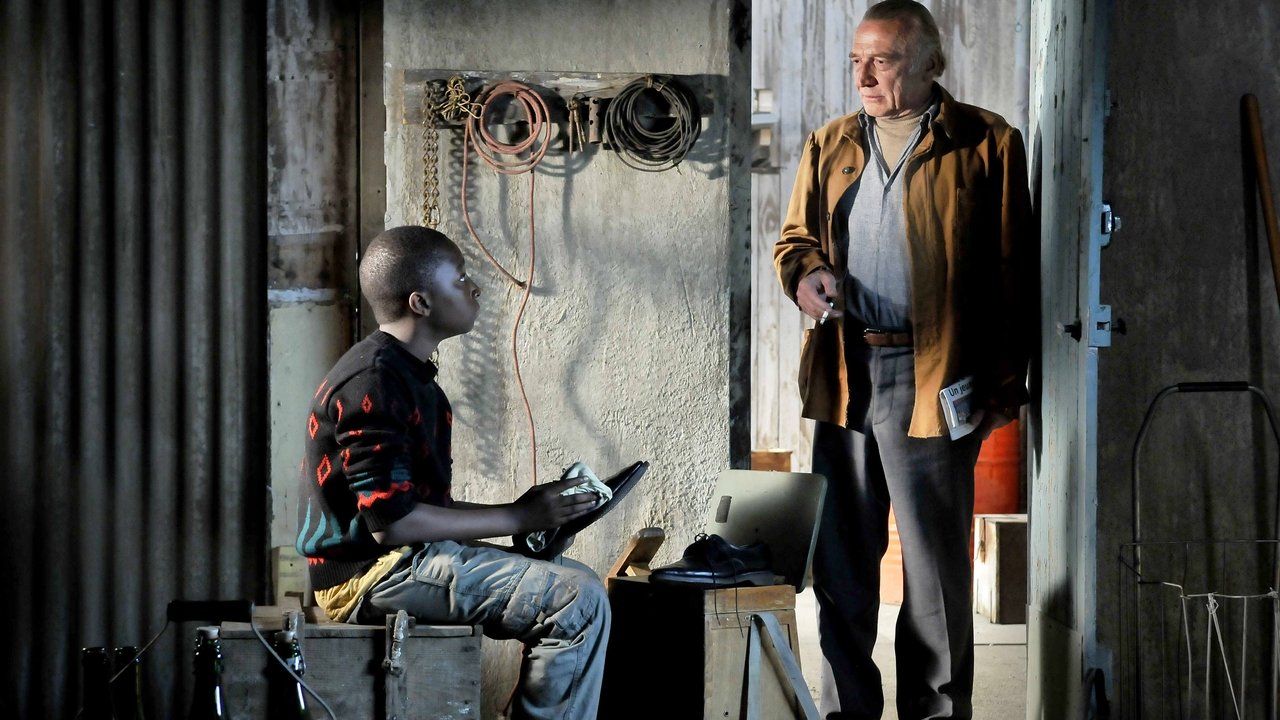
In the 2011 production LE HAVRE, the Finnish auteur Aki Kaurismäki steps away from his usual Helsinki setting for the first in what will be a trilogy of films in Western European port cities. Always rooting for the underdogs, Kaurismäki this time concentrates not just on the disenfranchised urban lower class, but on a socioeconomic strata arguably lower than them: illegal immigrants. Middle-aged shoeshiner Marcel (André Wilms), who lives in a run-down neighbourhood with loving wife Arletty (Kati Outinen) meets Idrissa (Blondin Miguel), a child who has found his way from Gabon to France inside a shipping container. Marcel decides to shelter the boy and see him on to England, his intended destination, but detective Monet (Jean-Pierre Darroussin) is on their heels.
In spite of the French setting, this remains a very Finnish film in its sparse dialogue and deadpan humour. Kaurismäki yet again uses a very drab colour scheme and sets the film ostensibly in the present, but with cars, radios and rock music dating from the 1950s. Like nearly every film he has made, there is a musical performance by an oldies rock 'n' roll band, complete with pompadours and leather jackets. This is getting appallingly repetitive. Basically, if you've seen any two previous Kaurismäki films, then you'll find almost nothing new in the aesthetic and even the plot.
That said, this is a more life-affirming film than his last, the absolutely bleak LÄHIKAUPINGIN VALOT of 2006. Kaurismäki is clearly concerned with the plight of those who would escape sub-Saharan Africa by any means necessary, and this leads the viewer to reflection, but his exposé of detention centres and police harrassment becomes heavy-handed at times.

K-9: P.I.
Votes 104 (5,7/10)
Date de sortie 30/07/2002
Détails »

K-9
Votes 616 (6/10)
Date de sortie 28/04/1989
Détails »

Seventeen
Votes 117 (7,2/10)
Date de sortie 21/09/2019
Détails »

Capernaum
Votes 909 (8,3/10)
Date de sortie 06/10/2018
Détails »

Dawn of the Dead
Votes 2527 (7/10)
Date de sortie 19/03/2004
Détails »

Old Yeller
Votes 174 (6,9/10)
Date de sortie 25/12/1957
Détails »

K-911
Votes 137 (5,5/10)
Date de sortie 07/12/1999
Détails »

Lassie
Votes 140 (6,1/10)
Date de sortie 22/07/1994
Détails »

A Boy and His Dog
Votes 207 (6,3/10)
Date de sortie 20/11/1975
Détails »

Shiloh
Votes 44 (5,6/10)
Date de sortie 30/11/1996
Détails »

The Breed
Votes 208 (5/10)
Date de sortie 17/05/2006
Détails »

Belle and Sebastian
Votes 476 (6,9/10)
Date de sortie 18/12/2013
Détails »

Belle and Sebastian 3: The Last Chapter
Votes 118 (6,7/10)
Date de sortie 07/02/2018
Détails »

Miracle in Milan
Votes 116 (7,2/10)
Date de sortie 08/02/1951
Détails »

Watchers
Votes 52 (5,3/10)
Date de sortie 02/12/1988
Détails »

Boule & Bill
Votes 234 (4,4/10)
Date de sortie 27/02/2013
Détails »

Belle and Sebastian: The Adventure Continues
Votes 242 (6,9/10)
Date de sortie 08/12/2015
Détails »

Barking Dogs Never Bite
Votes 114 (6,8/10)
Date de sortie 19/02/2000
Détails »

Saving Shiloh
Votes 9 (6,1/10)
Date de sortie 05/04/2006
Détails »

The Cloud-Capped Star
Votes 31 (7/10)
Date de sortie 13/04/1960
Détails »