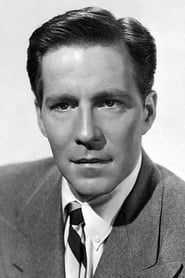
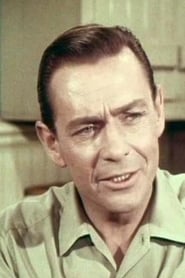
Brigadier General Frank Savage
Gregory Peck
Lieutenant Colonel Ben Gately
Hugh Marlowe
Colonel Keith Davenport
Gary Merrill
Major General Patrick Pritchard
Millard Mitchell
Major / Lieutenant Colonel Harvey Stovall
Dean Jagger
Sergeant McIllhenny
Robert Arthur
Major "Doc" Kaiser (flight surgeon)
Paul Stewart
Lieutenant Bishop
Robert Patten
Lieutenant Zimmerman
Lee MacGregor
Lieutenant Birdwell
Sam Edwards
Interrogation Officer
Roger Anderson
Captain Twombley, group chaplain (uncredited)
Lawrence Dobkin
Bombardier (uncredited)
Paul Picerni
Radio officer (uncredited)
Harry Lauter
Lord Haw-Haw, German radio commentator (voice) (uncredited)
Barry Jones
First patient in base hospital (uncredited)
Don Gordon
Sgt. Keller
Kenneth Tobey
Art Direction
Lyle R. Wheeler
Producer
Darryl F. Zanuck
Original Music Composer
Alfred Newman
Set Decoration
Thomas Little
Director of Photography
Leon Shamroy
Art Direction
Maurice Ransford
Screenplay
Beirne Lay Jr.
Special Effects
Fred Sersen
Orchestrator
Edward B. Powell
Set Decoration
Bruce MacDonald
John Chard
Under Pressure.
Twelve O'Clock High features one of Gregory Peck's best performances as Brigadier General Frank Savage, a tough no nonsense martinet brought in to shake up a World War II Bomber Squadron. The men are shattered emotionally and after it's deemed that their previous commander (Gary Merrill) has been soft with them, there is no chance of that happening with Savage - but is he himself taking too much on?
Split into two parts, the first half of pic deals with how a group of men in war time can reach their lowest ebb. Fear of the jinx, fear of cracking under the strain, these men are by definition demoralised. Things are further compounded by the appointment of Savage, who drags the group further down the battered emotional scale. Second half softens things for a short while as Savage's methods begin take a hold, then there's the missions, which in turn builds to the film's revelation, which as it happens lets Peck become a revelation as well.
Director Henry King is on form, showcasing the skill of directing an ensemble cast, which sees Dean Jagger add mighty heft to the work of Peck, Merrill, Hugh Marlowe, Paul Stewart and Millard Mitchell. The flying sequences are expertly photographed (Leon Shamroy), with the real footage splicing very effective, while the writing allows the piece to exude a realism factor, which then offers up a more humane war film that is delving into psychological stings. 8/10

Schindler's List
Votes 9357 (8,6/10)
Date de sortie 30/11/1993
Détails »

Army of Shadows
Votes 287 (8/10)
Date de sortie 10/09/1969
Détails »

The Counterfeiters
Votes 277 (7,4/10)
Date de sortie 09/02/2007
Détails »

Fury
Votes 7687 (7,4/10)
Date de sortie 15/10/2014
Détails »

Downfall
Votes 2081 (7,8/10)
Date de sortie 08/09/2004
Détails »

The Eagle Has Landed
Votes 151 (6,5/10)
Date de sortie 24/12/1976
Détails »

Overlord
Votes 1490 (6,6/10)
Date de sortie 01/11/2018
Détails »

The Boy in the Striped Pyjamas
Votes 4242 (7,8/10)
Date de sortie 07/05/2008
Détails »

The Pianist
Votes 4960 (8,3/10)
Date de sortie 17/09/2002
Détails »

Life Is Beautiful
Votes 8465 (8,5/10)
Date de sortie 20/12/1997
Détails »
Captain America: The First Avenger
Votes 14463 (6,9/10)
Date de sortie 22/07/2011
Détails »

Allied
Votes 3172 (6,7/10)
Date de sortie 17/11/2016
Détails »

Jojo Rabbit
Votes 2851 (8,1/10)
Date de sortie 18/10/2019
Détails »

The Dirty Dozen
Votes 605 (7,7/10)
Date de sortie 15/06/1967
Détails »

Suite Française
Votes 777 (7,4/10)
Date de sortie 05/11/2014
Détails »

Sophie's Choice
Votes 451 (7,5/10)
Date de sortie 08/12/1982
Détails »

Where Eagles Dare
Votes 459 (7,7/10)
Date de sortie 04/12/1968
Détails »

The Thin Red Line
Votes 1649 (7,4/10)
Date de sortie 25/12/1998
Détails »

Amen.
Votes 179 (7/10)
Date de sortie 13/02/2002
Détails »

The Great Escape
Votes 1412 (8/10)
Date de sortie 20/06/1963
Détails »