Stephen Campbell
**_Not a patch on_ Under the Wire _but still pretty solid_**
> _**_Anderson Cooper_**_: _Why is it important, do you think, to see these images? Why is it important for you to be there? Right now you may be one of the only Western journalists in Homs - our team has just left._
>
>_**_Marie Colvin_**_: _Yes, I mean, I had a discussion with your people, Anderson. I feel very strongly that they should be shown. Something like that, I think, is actually stronger for an audience, for someone who is not here, for an audience for which the conflict, any conflict, is very far away. That's the re__ality. These are 28,000 civilians, men, women and children, hiding, being shelled, defenceless. The little baby was one of two children who died today, one of the children being injured every day. That baby probably will move more people to think, "what is going on, and why is no one stopping this murder in Homs that is happening every day?"_
>**Cooper**: _The regime in Syria claims that they're not hitting civilians, that there is no armed conflict, that there is no war inside Syria, that they are basically just going after terrorist gangs._
>**Colvin**: _Every civilian house on this street has been hit. We're talking about a very poor popular neighbourhood. The top floor of the building I'm in has been hit, in fact, totally destroyed. There are no military targets here. There is the Free Syrian Army, heavily outnumbered and out-gunned - they have only Kalashnikovs and rocket-propelled grenades. But they don't have a base. There are more young men being killed, we see a lot of teen-aged young men, but they are going out to just try to get the wounded to some kind of medical treatment. So it's a complete and utter lie that they're only going after terrorists. There are rockets, shells, tank shells, anti-aircraft being fired in parallel lines into the city. The Syrian Army is simply shelling a city of cold, starving civilians._
>
>**Cooper**: _Thank you for using the word "lie." I think a lot of people will want to thank you, because it's a word we don't often hear, it's not often used, but it's the truth in this case. The Syrian regime and their representatives have continually lied, and they have lied on this program to us directly. Marie, you have covered a lot of conflicts over a long time. How does this compare?_
>**Colvin**: _This is the worst, Anderson, for many reasons. I think the last time we talked was when I was in Misrata. It's partly personal safety, I guess. There's nowhere to run. The Syrian army is holding the perimeter. And there's just far more ordinance being poured into this city and no way of predicting where it's going to land. Plus, there's a lot of snipers on the high buildings surrounding the Baba Amr neighbourhood. You can sort of figure out where a sniper is, but you can't figure out where a shell is going to land. And just the terror of the people, and the helplessness of these families hiding on the first floor. All they can do is hope it doesn't hit them. That's very, very difficult to watch._
- Marie Colvin speaking with Anderson Cooper; _Anderson Cooper 360_ (February 22, 2012). Colvin was killed in a mortar attack several hours later
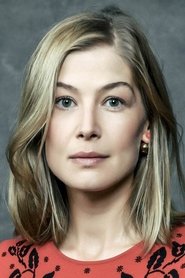
Telling the story of the last decade or so of _Sunday Times_' foreign affairs correspondent Marie Colvin, and based on Marie Brenner's 2012 _Vanity Fair_ article, "Marie Colvin's Private War" (later expanded into a book, _A Private War: Marie Colvin and Other Tales of Heroes, Scoundrels, and Renegades_, to coincide with the release of the film), _A Private War_ was seen as a major awards contender when it was first shown to near-universally positive reviews at the 2018 Toronto International Film Festival. Rosamund Pike, in particular, was singled out for her portrayal of Colvin, with several of Colvin's family and friends stating that the performance was so accurate, it unnerved them. Obviously, the predictions didn't come to pass, with the film doing poor box office and failing to have any kind of an impact on awards season (Pike was nominated for a Golden Globe, but there was no Academy or BAFTA love whatsoever). That's a bit of a shame, as it's a fine film. Having said that, however, it's nowhere near the quality of Christopher Martin's exceptional _Under the Wire_ (2018), a documentary about Colvin's last assignment, and how her photographer, Paul Conroy, got out of Syria after her death. Wisely, screenwriter Arash Amel and director Martin Heineman chose not to tell the same story as Martin, focusing more on Colvin's life in London and her previous assignments, and concluding with her death. This makes sense, as the story of how Conroy got out is a movie unto itself, complete with plot twists, heroism, sacrifice, a villain who turns out to be a hero, and against-the-odds survival, and it's a story that's definitively told in Martin's documentary and Conroy's own book, _Under the Wire: Marie Colvin's Last Assignment_ (2013).
With this in mind, _A Private War_ definitely has its own merits, as it deals with elements of Colvin's life not touched on by Martin. Avoiding hagiography, Heineman doesn't shy away from some of the darker aspects of Colvin's character (her refusal to accept she was suffering from PTSD, her alcoholism, her acerbity, her poor treatment of pretty much everyone she came into contact with, her appalling hygiene), with the film more interested in asking _why_ she did what she did rather than simply showing what she did. Part-biopic, part-journalistic drama, part-war movie, if _A Private War_ has a salient theme, it's that of The Truth and the price that some people are willing to pay to ensure that that Truth is known; in Colvin's case, she paid with her mental well-being, and, ultimately, her life. It's by no means perfect, with some awful dialogue, scenes so on-the-nose you might need rhinoplasty after watching them, and an uneven central performance. Comparisons to _Under the Wire_ are also unavoidable. However, given the fact that it has sunk without a trace, it's much better than I was expecting. A respectfully told story, the material is treated in a suitably serious manner, with historical authenticity always paramount. Which is more than I can say for Peter Farrelly's _Green Book_!
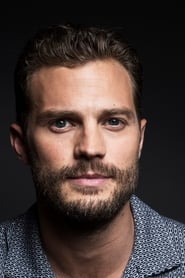
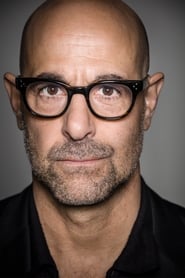
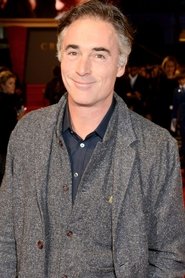
The film opens in the Baba Amr neighbourhood of Homs, Syria during the 2012 Homs Offensive. The Offensive is an escalation of the Siege of Homs, which has been ongoing for almost a year, with the Syrian Armed Forces under the command of President Bashar al-Assad fighting against the Syrian National Council opposition movement. On February 3, the Free Syrian Army attacked a government checkpoint, killing 10 soldiers, in response to which, the Syrian Armed Forces launched the Offensive, which is essentially a sustained artillery bombardment of Homs. Although many in the West believe the shelling is indiscriminate, the Syrian government blame "_terrorist gangs_" for the civilian deaths, stating that the shelling is precisely targeted. The film then cuts to 2001, introducing us to Marie Colvin (Pike), an American-born journalist working as a foreign affairs correspondent for _The Sunday Times_, who is trying to make things work with her ex-husband, David Irens (Greg Wise; based on her real ex-husband, Patrick Bishop). When her editor Sean Ryan (Tom Hollander) tries to send her to Palestine in 2002 to report on the recent suicide bombs for which Hamas have claimed responsibility, she refuses to go, telling him that although the Sri Lankan Civil War is nearing its end, there is an "_unreported war_" still going on. He reminds her that western journalists have been banned from government-controlled areas for six years, but she refuses to listen, and he reluctantly agrees to send her. Embedded with a regiment of the Liberation Tigers of Tamil Eelam (LTTE), Colvin is reporting on the lives of Tamil peasants when she and her crew are ambushed by the Sri Lankan Army, and she is hit by shrapnel from an RPG, losing the sight in her left eye, and forcing her to wear an eyepatch for the rest of her life. The film then covers a series of events from 2002 to 2012 - her refusal to accept that she is suffering from PTSD; the breakdown of her relationship with Irens; meeting freelance photographer Paul Conroy (Jamie Dornan) whilst covering the Iraq War; the use of civilian digging equipment to unearth an unmarked mass grave of 600 Kuwaiti POWs in Fallujah; meeting and beginning a relationship with Tony Shaw (a criminally underused Stanley Tucci; based on Richard Flaye, Colvin's partner when she died); her second interview with Muammar Gaddafi (an unrecognisable Raad Rawi) during which she asks questions that could easily get her killed, also telling him, "_the only people who believed in you wound up at the wrong end of your rockets_"; and finally, her assignment (given to her at her own insistence) in Syria.
Generally uninterested in the official versions of events, which she equated with propaganda and often outright lies, Colvin was instead primarily concerned with presenting the stories of those usually forgotten in conflicts, arguing that "_being a war correspondent is about what people are going through_". Believing passionately that "_journalism can make a difference_", her career exemplified this belief. For example, in September 1999, she was reporting on the East Timorese independence referendum. When the majority of voters chose independence from Indonesia, the pro-Indonesian militia began a wave of violence in the capital city, Dili. As journalists fled the country, tens of thousands of civilian refugees left the city. However, around 1,500 made their way to the UN compound. Colvin was urged to get out of harm's way, but refused, and, along with two Dutch reporters, Irene Slegt and Minka Nijhuis, headed instead to the compound. After four days of the trio shaming the Indonesian government in the international press, the journalists, the UN staff, and the 1,500 civilians were allowed to leave safely. In December that same year, whilst covering the early months of the Second Chechen War, she was embedded in the mountains with Chechen rebels. Finding her extraction route cut off by Russian paratroopers, she instead escaped over a snow-swept 12,000-foot mountain into Georgia. Surviving eight days in the wilderness, braving chest-high snowdrifts, hunger, exposure, and altitude sickness, she was eventually rescued by a Georgian helicopter dispatched at the behest of Bishop and her _Sunday Times_ colleague, Jon Swain. When she lost her eye in Sri Lanka in 2002, she still managed to file copy before that day's deadline. In 2011, her interview with Gaddafi was the first interview he had given since the commencement of the Arab Spring earlier that year. Essentially, Colvin was not someone who simply believed "_journalism can make a difference_", she was someone who made sure journalism _did_ make a difference.
Although _A Private War_ is certainly interested in many of these events, and spends time showing us Colvin in Sri Lanka, Iraq, Libya, and Syria, it is just as interested in depicting the mental price Colvin paid for her work. Examining how she processed the things she saw (or didn't process them, as the case may be), the film suggests that it was only when she was out of harm's way that the scale of the trauma would hit her. Heineman does show us the award ceremonies and the glamour, but he pays far more attention to the PTSD, the addiction, the bodily injury, and the loneliness, with much of the film dealing with Colvin's battles with her demons. In one telling scene, she explains to Conroy,
> _I diet fiercely because I don't want to get fat, but I also have seen so many people in the world go hungry, so I like to eat. I want to be a mom, like my sister, but I've had two miscarriages and I have to accept the fact that I might never be that. I fear growing old. But then I also fear dying young. I'm most happy with a vodka martini in my hand, but I can't stand the fact that the chatter in my head won't go quiet until there's a quart of vodka inside me._
It's not the most subtle dialogue of all time, but it does do the job of conveying just how turbulent her soul really is, with each assignment chipping away a little more of her psyche.
The film runs with the premise that Colvin was fundamentally correct when she argued that the real stories of war, the way to make people care, are not the socio-political causes of the conflict, or even the engagements, but the civilians caught in the crossfire;
> _it doesn't matter what type of plane just bombed a village. What is important is the human cost of the act. People connect with people._
Despite her honourable intentions, however, the film does suggest that Colvin was simply addicted to the adrenaline, doing what she did as much for her own personal needs as her commitment to a greater truth. Her insistence on going to the most dangerous places on Earth is depicted as a kind of vicious circle, with her inability to cope with the horrors she witnesses compelling her to seek out ever more harrowing subject matter. As she tells Conroy,
> _I hate being in a war zone. But I also feel compelled, compelled to see it for myself._
This aspect of her character reminded me a little of that famous line in Francis Ford Coppola's _Apocalypse Now_ (1979), when Willard (Martin Sheen) states, "_when I was here, I wanted to be there; when I was there, all I could think of was getting back into the jungle._" In this sense, the film illustrates how her rational professional judgement is in perpetual conflict with her addictive urges, with her compulsion to put herself at risk usually overwhelming her ability to logically judge a situation before plunging into it.
The film also spends time on Colvin's private life, attempting to humanise her and round out the character, showing her tempestuous relationship with Irens, her frequent clashes with Ryan, her descent into alcoholism, her refusal to accept help from her best friend Rita Williams (Nikki Amuka-Bird), her mentoring of young journalist Kate Richardson (Faye Marsay), her tender final relationship with Shaw. An especially telling scene in this regard concerns her eye injury. After asserting that she is unconcerned about losing her eye, we see her alone, looking at the injury in a mirror, with Pike conveying her sense of loss brilliantly. In another scene, she stands in front of a full-length mirror, completely naked, looking at herself with a curious sense of wonder. We think she's alone, but we then see that Shaw is with her, as the two share a bath. These moments reveal as much about her as the more expositionary dialogue-heavy scenes do, and Pike's performance in these wordless scenes is really quite extraordinary, doing a great deal with very little.
Elsewhere, however, the performance is a little uneven. Pike certainly captures Colvin's mannerisms, to a degree of authenticity comparable to Charlize Theron's depiction of Aileen Wuornos in Patty Jenkins's _Monster_ (2003). However, there are several scenes that don't ring emotionally true at all, with the performance coming across like a performance rather than something truly lived. In particular, a scene in which Colvin berates Ryan for his lack of trust in her has the feel of someone acting (and overacting at that), with little sense of psychological verisimilitude. Indeed, even though most of the other characters are one-note (including Conroy) or no-note (Shaw, in particular, is poorly written), they often feel more natural than Colvin, more realistic, with the actor portraying them not quite as visible. Pike is certainly intense, and her impression of Colvin is uncanny, but it takes more than an accurate impression to anchor a real-life character, and oftentimes, Pike's performance is more showboating than soulful.
From an aesthetic point of view, it's a good looking film. It's worth pointing out that this is Heineman's narrative feature film debut, with his previous work confined to documentaries such as _Escape Fire: The Fight to Rescue American Health Care_ (2012), _Cartel Land_ (2015), and _City of Ghosts_ (2017). Especially important in relation to _A Private War_ are Cartel Land, in which he was embedded with a vigilante group facing off against Mexican drug cartels, and _City of Ghosts_, in which he profiled the Raqqa is Being Slaughtered Silently (RBSS) citizen journalist group, who report on human rights abuses in Raqqa by the Islamic State of Iraq and the Levant (ISIL). These two films show his familiarity with danger, journalistic risk, and with Syria itself. What's interesting, however, is that whereas these films saw him bring cinematic sensibilities to documentary filmmaking, in _A Private War,_ he does the exact opposite, bringing documentary techniques to a narrative film, especially in relation to the battle scenes, which have a gritty intensity that rings true. Along the same lines, the interview with Gaddafi reminded me of the meticulous pseudo-documentarian opening scenes of Michael Mann's journalistic masterpiece, _The Insider_ (1999), where Mike Wallace (Christopher Plummer) conducts a similar interview with Sheikh Mohammad Hussein Fadlallah (Cliff Curtis) in Lebanon.
Although the film adopts a realistic perspective for the most part, there are some terrific visuals. The opening shot, for example, is an aerial view of Homs, showing the devastation and the shattered buildings, as far as the eye can see, with not a sign of life anywhere. It's an immensely strong image with which to open the film, conveying so much without dialogue, in a similar manner to the extraordinary opening shot of José Padilha's masterful _Ônibus 174_ (2002). The opening sequence is also aurally impressive, with the sounds of artillery bombardment preceding any visuals or dialogue. Legendary cinematographer Robert Richardson (_Natural Born Killers_; _Hugo_; _The Hateful 8_) shoots the battle scenes in a cinéma vérité style, employing handheld cameras, loss of focus, shallow depth of field, and asymmetrical framing. These elements all work together to create a strong sense of immediacy and authenticity. Additionally, Heineman allows the rubble, bodies, injured children, and wailing women bleed from one war zone into those elsewhere, to such an extent that each conflict is interchangeable with all of the others. This isn't a criticism, however, it's a visual representation of one of the film's themes; every war is the same as every other war, especially in terms of the civilians wounded and killed during the fighting. In terms of representing Colvin's state of mind, Heineman employs disorientating scene transitions, flashbacks, dreams, and sudden temporal jumps, often transitioning from one period to the next via Colvin's own besieged mind. The work of editor Nick Fenton (_Submarine_; _The Selfish Giant_; _Double_) is also exemplary, increasing the pace of the editing depending on Colvin's mental state.
Although _A Private War_ does suffer from the occasional clunky bit of dialogue and a slightly uneven central performance, it's a strong film. Telling a different story than _Under the Wire_, it doesn't shy away from the darker and less savoury aspects of Colvin's life, presenting her in a non-hagiographic manner, as someone fundamentally damaged by what she does. Unafraid of examining her careerism and setting it beside a more humanitarian and philanthropic interpretation of her work, Heineman and Amel also address the price that all war correspondents must risk paying, irrespective of why they are there in the first place. The film is deeply respectful of both the craft and the courage of such people, not the least of whom was Colvin herself. At one point in the film, she claims, "_I see it so you don't have to_". Heineman, however, suggests that she saw it so that the rest of could see it too.