Stephen Campbell
**_A poignant and poetic evocation of childhood_**
> _We were allowed to be what we were, frightened and vengeful - little animals, clawing at what we needed._
- Justin Torres; _We the Animals_ (2011)
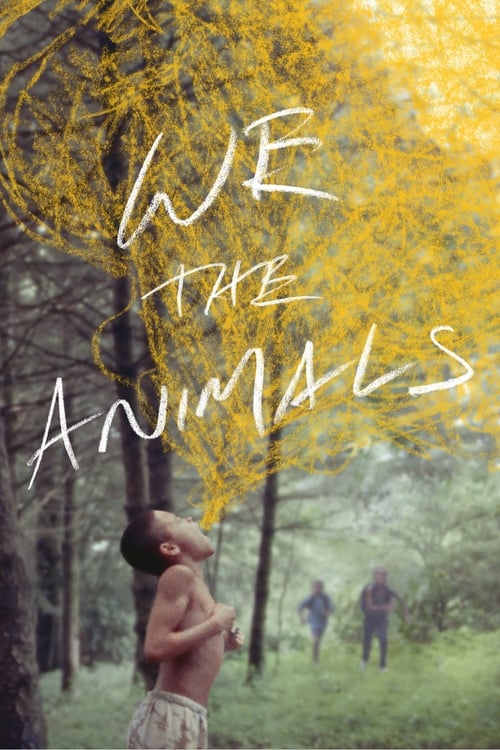
A remarkably contained and intimate story featuring only five main cast members and around ten locations, _We the Animals_ is about a young boy awakening to the fact that he's homosexual. Equal parts disassociated lyricism and warts-and-all grittiness, in attempting to untangle the struggles concomitant with his burgeoning queerness, the film looks at issues such as the ever-increasing distance between himself and two brothers with whom he was once so close, the dawning realisation that although his parents love each other, so too are they destroying one another, and the fact that the crystallising of one's perception of the world goes hand-in-hand with a loss of innocence. Despite the themes with which it engages, however, _We the Animals_ is relatively apolitical (never once, for example, does it feel like a principled ideological stand against notions of heteronormativity, whilst the domestic violence in the family is shown as coming from both parents, not just the father). Less concerned with narrative beats and character arcs than with tone and impressionistic visual poetry, the film operates in a similar magical realist key as Benh Zeitlin's masterful _Beasts of the Southern Wild_ (2012), whilst also calling to mind the Texas scenes of Terrence Malick's opus _The Tree of Life_ (2011), especially in the whispery pronouncements of the voiceover narration. Mixing nostalgia, idealism, recrimination, anger, personal freedom, and the constant conflict between optimism and experience into a potent whole, whilst the narrative could be accused of being a little insubstantial, _We the Animals_ is an effective and poignant evocation of the modulations of childhood.
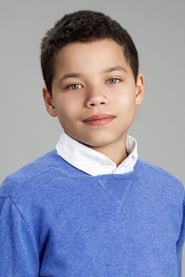
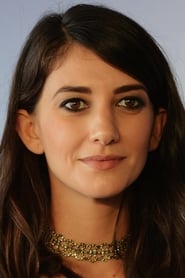
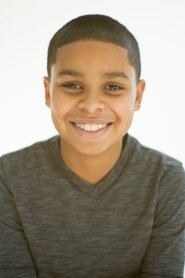
Set in upstate New York in the 1990s, the film tells the story of nine-year-old Jonah (Evan Rosado), who lives with his Ma (Sheila Vand) and Paps (Raúl Castillo), and two slightly older brothers, Manny (Isaiah Kristian) and Joel (Josiah Gabriel). Existing just above the poverty line in an isolated and dilapidated house, the family is tightly-knit but dysfunctional, although Ma and Jonah are especially close. Married when they were still teenagers, both Ma and Paps possess violent tempers, which often leads to arguments that become physical. Although they seem to still love one another, and although the passion they once felt for one another is still there, both are deeply unhappy and want nothing more than to escape the poverty that pervades every aspect of their lives. However, they are both realistic enough to know that the chances of that happening are slim - she works a thankless job on an assembly line, he works as a part-time security guard at a factory. As time passes, Jonah begins to notice how different he is from his siblings; more contemplative and wistful, he is as happy reading or drawing and writing in a scrapbook as he is joining Manny and Joel in their boisterous adventures. However, when Paps leaves after a violent argument with Ma, she takes to bed, refusing to get up, forcing the unsupervised trio to fend for themselves. When they are caught stealing vegetables from a neighbour's garden, the man takes pity on them and makes them a meal, introducing them to his teenage grandson, with whom they become friends. When the boy later shows them a porn movie, Jonah is taken aback when he reacts more strongly to the brief clip of two men having sex than anything else in the video. And so he must attempt to navigate something he doesn't understand and can't articulate, in a _milieu_ built on rugged heterosexual masculinity.
_We the Animals_ is the fiction film debut of documentarian Jeremiah Zagar (_In a Dream_; _Captivated: The Trials of Pamela Smart_), and was written for the screen by Zagar and Daniel Kitrosser, from Justin Torres's semi-autobiographical 2011 novel of the same name. Considered to be unfilmable at the time of its publication, the novel features relatively little dialogue, is written entirely in the first-person plural, and foregrounds the unreliability of memory. However, Zagar involved Torres in every part of the adaptation process, sending him the various iterations of the screenplay, having him on set during filming, and even inviting him into the editing room.
Perhaps because of this, although the film changes some aspects (the three brothers are unnamed in the novel, for example, whilst the protagonist's first homosexual experienced is far more graphic than in the film), it remains a remarkably authentic adaptation, capturing both the tone and texture of Torres's prose. And much like the novel, rather than presenting a classically structured plot with forward momentum, the film is instead composed of vignettes presented in a broadly, but not exclusively, chronological manner. Within this scheme, _We the Animals_ is essentially a _bildungsroman_, and in its depiction of a young boy struggling to understand why he feels so different to those around him, it covers some of the same thematic ground as Barry Jenkins's _Moonlight_ (2016). However, as mentioned, it has more in common with the esotericism and ethereal magical realism of films like _The Tree of Life_ and _Beasts of the Southern Wild_ than with Jenkins's more grounded film. In a similar manner, although its depiction of the three brothers' unsupervised mischief recalls Sean Baker's _The Florida Project_ (2017), _We the Animals_ is far more lyrical and existentialist.
Aesthetically, there's a lot to admire here. Zagar's documentarian background is especially noticeable in his use of the techniques of _cinéma vérité_; scenes of the brothers chasing one another through long grass, for example, weren't blocked by Zagar, but were improvised on location by the performers, with cinematographer Zak Mulligan simply following along behind them with a Steadicam, reacting to their spontaneous movement, giving the film a sense of being unmediated. In another stylistic choice, the film initially presents the boys as relatively indistinguishable from one another (the "we" of the novel is manifested in voiceover lines such as, "_when we were brothers, we wanted more_"). However, at about the half-way point, this begins to change, as Jonah starts to become aware that he isn't like his brothers, and so begins to withdraw from them, first ideologically, then physically. In tandem with this, the voiceover narration becomes less and less frequent, and hence so too does the use of the plural pronoun.
Tied into this are the crayon pictures which Jonah draws in his scrapbook, and which are presenting in crudely animated form (designed by Mark Samsonovich) throughout the film. As Jonah struggles to process the realities of sex, violence, and his increasingly fraught family life, the nature of the images begins to change; from relatively innocent doodling to images that are far more sexualised and violent. Also important here is how well Zagar uses the _mise en scène_ to suggest psychology. In the early parts of the film, equal screentime is given to shots of Jonah under his bed drawing and shots of him huddled with his brothers in a blanket fashioned like a tent. However, as the film progresses, we see less and less of him in the tent, and more under the bed, something which carries huge thematic importance for the penultimate scene.
In terms of focalisation, the film is tied rigidly to Jonah's perspective throughout, never allowing the audience access to anything that he himself doesn't explicitly see or hear. In a general sense, this can be seen in the frequency with which Mulligan places his camera at Jonah's eye level. A more specific example involves a scene when Paps is arguing with another man off-camera. We can hear the voices and make out the odd word, but we can't clearly hear all that is said, because neither can Jonah. It's an extremely effective use of off-screen space, and recalls a similar scene in Paul Dano's _Wildlife_ (2018). Also important in this sense is that the film is shot on very grainy Super 16, predominately with wide lenses and a shallow depth of field that flattens the backgrounds. This means that the images don't possess the normal sheen or depth, thus foregrounding the impreciseness of memory; it is as if we are looking at events through gauze, half-remembered and half-embellished, a formalism that doesn't distinguish between past and present, which reminded me a little of Andrei Tarkovsky's _Zerkalo_ and Terence Davies's _Distant Voices, Still Lives_ (for my money, the best representations of memory ever put on film).
Thematically, although the story would seem to lend itself to socio-political commentary, Zagar is relatively uninterested in anything beyond Jonah's immediate experience; so if Jonah is unaware of how homosexuals are perceived in the country at large, then such information cannot be presented in the film. However, there are some undeniable thematic undercurrents. For example, when we are first introduced to Ma and Paps, they seem blissfully in love, but this image is shattered shortly afterwards when we see Paps's temper. However, it soon becomes apparent that he isn't the sole purveyor of violence - when he arrives home with a truck of which Ma disapproves, she slaps him several times and verbally berates him. We also see her snap at the children on several occasions, something we never see Paps doing. However, none of this is to excuse his violence or his attempts to downplay it; after splitting her lip during one argument, he tells the boys that he'd been "_punching on her a little_".
Some of the dialogue is also achingly beautiful, but underneath the poetry, there are darker implications. When Jonah sees a light bulb in a metal cage, he asks Pa "_why is that light in a cage?_", to which Pa answers, "_so it doesn't fly away._" Another example sees Ma tell Jonah that when children are 10, they leave their parents, asking him, "_promise me you'll stay mine forever._" When he asks "_how_," she states, "_simple; you're not 10, you're 9+1_". There's a beauty to this sentiment, but so too is there something unhealthy about it; in one sense she's denying him agency, and in another, she's making him feel guilt for something in his future. Either way, it's not great parenting.
There are, of course, a few problems. For one thing, we've seen most of the issues with which the film deals in _Beasts_ and _Tree of Life_, and it's nowhere near as accomplished as either of them. Another issue is that whilst the sense of place is magnificently handled, there is a sense that we are never really allowed into the characters' cores, even Jonah, with Zagar more interested in lyricism that emotion; in trying to convey Jonah's interiority through abstract visual poetry, Zagar neglects the issue of emotional realism. This should be a heartbreaking film, but it isn't, mainly because the characters exist primarily to facilitate philosophical musing, rather than as unique entities in themselves.
That aside, however, _We the Animals_ is a superbly realised film and an impressive debut. Dealing with issues of masculinity, domestic violence, homosexuality, and the discovery of self in a _milieu_ not predisposed to accepting a self which deviates from normative societal doctrine, it's very much focused on the impressionistic and chaotic nature of memory. Depicting a young life yet to be fully formed, the film's inconclusive ending is vital - life doesn't have a three-act structure that simply ends with the closing credits. Things are far more complicated than that. And this might be the film's crowning achievement; in a story ostensibly about the past and how we access it, the final impression with which it leaves us is that we can never know what lies in our future.